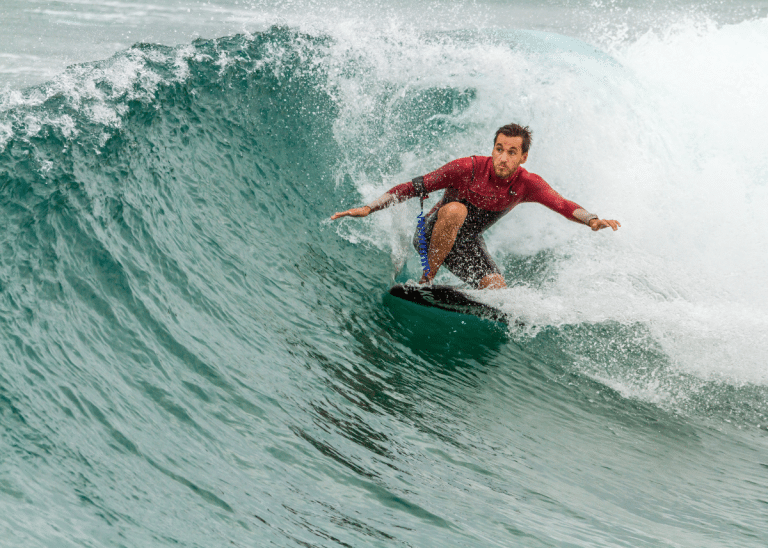
How Much Do Surfing Lessons Cost: What to Expect
Surfing has become a beloved water sport for enthusiasts worldwide, offering both excitement and a connection to the ocean. For beginner surfers looking to ride the waves, professional surfing lessons are essential for mastering the art and ensuring a safe start to this thrilling pastime while receiving expert instruction. And the most effective way to take your surfing to the next level.
Let’s go over how much it costs to learn to surf from a professional and help you make an informed decision based on your preference and budget.
This post contains affiliate links, which means I receive a small commission, at no extra cost to you, if you make a purchase using this link. Please see my disclosure for more details.
Understanding the Basics of Surfing Lessons
Before you dive into the world of surfing, it’s important to know what to expect from surfing lessons. These structured sessions are designed to equip you with the core skills necessary to catch waves and enjoy the sport safely.
What is a Surfing Lesson?
A surfing lesson is a structured learning experience where you acquire the necessary skills to surf from an expert surf instructor. As a new surfer, you’ll learn the basic skills and fundamentals of surfing which include understanding water safety procedures, surf etiquette, wave dynamics, and the basics of standing up on a surfboard.
Types of Surfing Lessons
Surfing lessons come in different formats to suit various learning styles and comfort levels:
- Private Surfing Lessons: Personalized one-on-one coaching focusing on your individual learning pace.
- Group Surfing Lessons: A social learning environment with other beginners, which often comes at a lower cost than private lessons.
Surfing Lesson Structure
Here’s what you can typically expect from the structure of a surfing lesson:
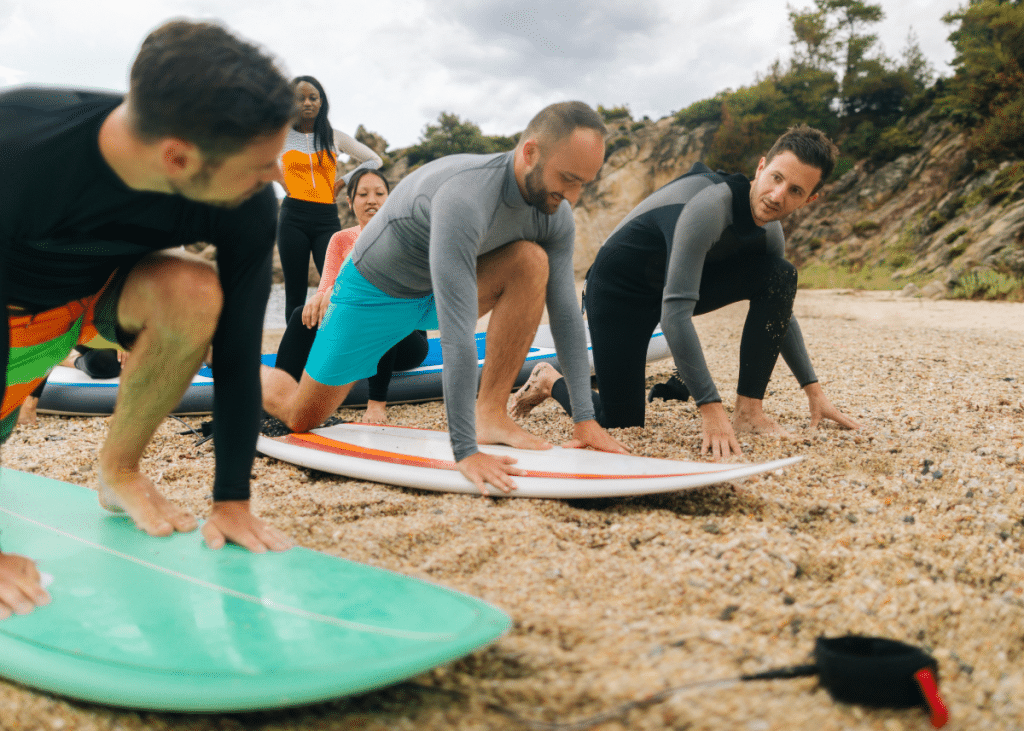
- Theory: You’ll start with a brief on land to cover safety and basics.
- Warm-Up: Physical preparation to ensure you’re ready to hit the water.
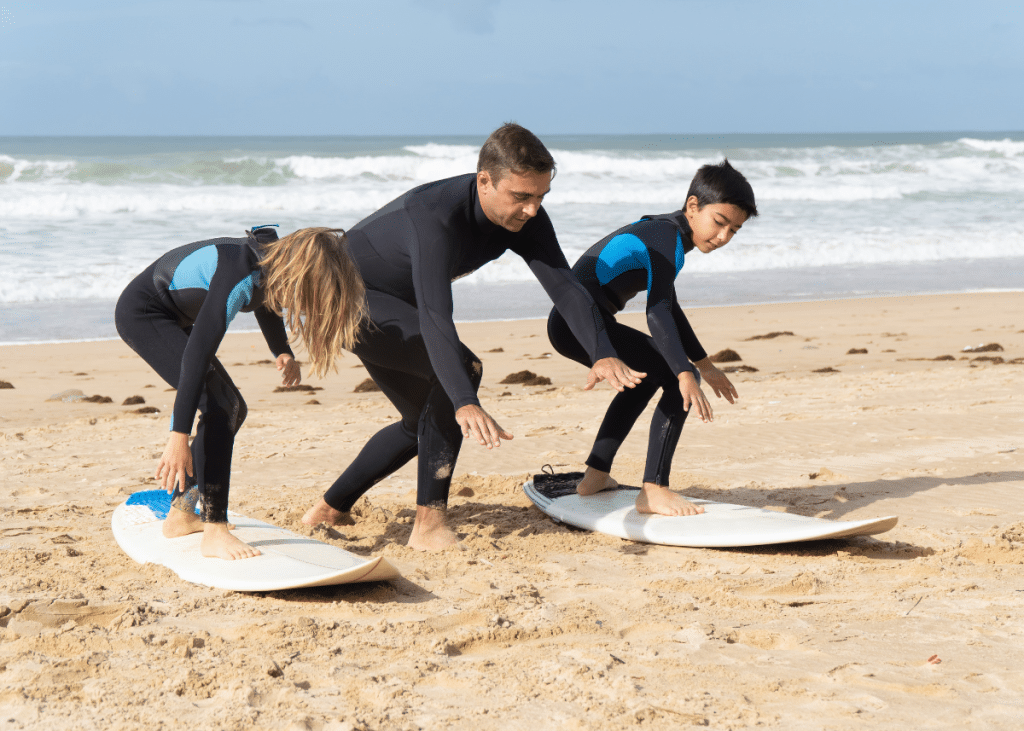
- Practice: Dry-land practice of fundamental movements.
- Water Time: The bulk of the lesson is spent in the water, learning to paddle, position yourself, and ultimately, catch waves.
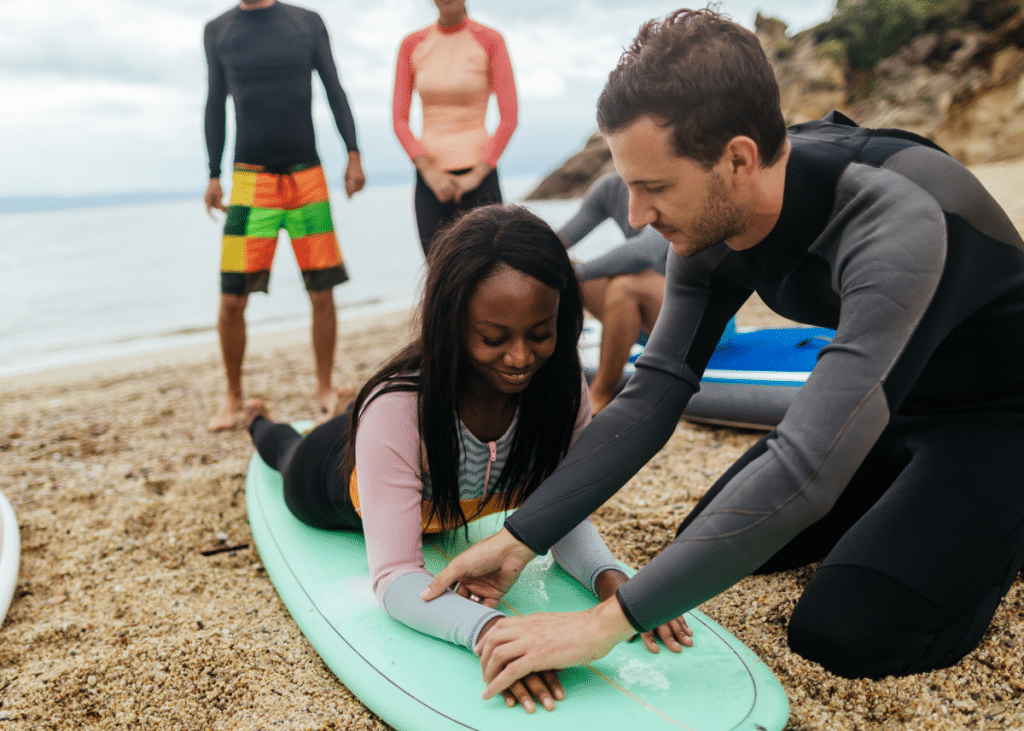
Factors Influencing the Cost of Surfing Lessons
When you’re looking to start surfing, the cost of lessons can vary widely. As you consider your options, it’s important to understand the key elements that contribute to the overall price, from where you’ll be catching waves to who’s teaching you.
Location and Surf Spots
The region and the popularity of the surf spots can significantly affect lesson costs. For example, lessons in California might be less expensive due to the abundance of surfing locations, whereas spots in South Carolina or Texas may have different pricing structures. It all comes down to supply and demand.
Group Size and Lesson Type
You have a choice between private lessons and group lessons, both impacting the price. A one-on-one private surf lesson tends to be more costly, but offers more personalized attention, usually ranging from $75 to $150 per hour. Group lessons, on the other hand, are shared experiences that can be more budget-friendly. Before making your decision between private or group surf lessons, ask the surf school about the usual student ratio and if the groups are small enough for first timers.
Experience Level of Instructor
Instructors with extensive experience or special certifications might charge more for their expertise. The skill level of the surf instructors can be an important factor to consider if you’re looking for advanced coaching or highly personalized feedback on your technique.
Duration and Frequency of Lessons
Longer lessons or packages with multiple lessons can also influence the overall price you’ll pay. Some surf schools may offer discounts on bulk lesson purchases, making the per-session cost lower.
Remember, every surf school and location may have its own set of pricing, so it’s always good to research and compare before making your decision.
The Value of Investing in Surfing Lessons
Investing in surfing lessons can greatly accelerate your learning process and ensure that you gain the maximum benefit from every moment you spend in the water. With the guidance of advanced surfers, you’ll build a solid foundation of skills, which can be invaluable, whether you’re looking to enjoy surfing as a hobby or pursue it at a competitive level.
Long-Term Benefits of Professional Training
Professional training offers you a structured approach to learning how to surf. Under the tutelage of experienced instructors, you’ll grasp the essentials of surfing technique, ocean safety, and etiquette much faster than you might on your own. Beginning with proper form and understanding of wave dynamics, professional lessons can provide you with the necessary skills to progress safely and with confidence. The initial investment in your experience level sets you up for long-term success and enjoyment in the sport.
- Safety Knowledge: Instructors ensure you understand currents, how to read the ocean and respond in emergencies.
- Correct Techniques: Learning the right techniques early on helps prevent the development of bad habits.
Importance of Consistent Practice
Consistent practice is key to mastering any new skill, and surfing is no exception. While the ocean is your ultimate teacher, regular guidance from an expert instructor can help fine-tune your abilities and give you targeted exercises to practice. This consistent investment of time and effort under supervision helps reinforce what you learn, embedding the skills deeply into your repertoire.
- Practice Drills: Instructors can provide specific exercises for you to work on, helping to reinforce muscle memory and proper techniques.
- Progress Tracking: A structured lesson plan allows for monitoring and recognizing your progress, keeping you motivated.
Community and Networking
Joining surf lessons not only improves your skill but they are a great way to plug you into a community. The networking opportunity with fellow surf enthusiasts and professionals can enhance your learning process and open doors to new experiences. These connections can be supportive, provide camaraderie, and might even lead to future competition opportunities.
- Local Knowledge: Gain insights into the best local spots and ocean conditions from your newfound community.
- Support System: The surf community provides encouragement and can share valuable tips to elevate your surfing experience.
By investing in surfing lessons, you commit to a journey that extends beyond the water – it’s an investment in lifelong skills, friendships, and experiences.
Additional Costs to Consider
While learning to surf is exciting, it’s important to factor in the additional costs that come with the sport beyond lesson fees. Being prepared will help ensure that you enjoy your experience to the fullest.
Surf Equipment and Gear
- Surfboards: You may opt to rent a surfboard for your lessons, which can cost between $20 to $50 a day. On the other hand, you can bring your own board. If you are looking to purchase, beginner surfboards have an average cost of $300 to $1,000.
- Wetsuits: Rental prices for wetsuits are generally $10 to $20 per day. Buying a new wetsuit can vary widely, from approximately $50 for basic models to over $400 for high-end suits.
- Additional Gear:
- Rash guards are recommended to prevent chafing; these typically cost between $20 and $50.
- Surfboard wax is essential for grip and costs about $1 to $3 per bar.
- A surfboard traction pad can be useful for better foot grip and might set you back $20 to $40.
Travel Expenses and Accommodations
If you’re traveling to a surf destination, transport costs can vary widely depending on distance and mode of transportation. As for staying overnight, accommodations can range from budget hostels at $30 a night to upscale resorts costing several hundred dollars per night. Grouping transportation and lodging together for comparisons or package deals might save you some money.
Insurance and Safety Equipment
Investing in insurance for both health and gear, especially if you own your equipment, can protect you from unexpected accidents and theft. Costs will depend on policy details and the value covered.
Safety gear like helmets or reef boots aren’t typically required for beginners but may be highly recommended in certain locations. Prices for safety gear will often start at around $20 and can go up if opting for specialized equipment.

Tips for Cost-Saving
When looking to save money on surfing lessons, consider timing, group options, and packages.
Off-Peak Booking
Booking your lessons during off-peak times can lead to significant savings. Surf schools often offer discounts during the weekdays or outside of the main tourist seasons.
Group Discounts
Group lessons are usually more affordable than private ones. Gather some friends and ask for group discounts, which can range from $50 to $100 per person with savings increasing as the group size does.
Package Deals
Opt for package deals which may include multiple lessons and equipment rentals. This bundle approach reduces the total cost compared to purchasing each lesson individually.
Local Discounts and Membership Programs
Explore local discounts or membership programs offered by surf schools. Residents or frequent visitors might find great deals. Keep an eye out for:
- Loyalty programs: Discounts for repeat customers
- Membership benefits: Special rates for members
Frequently Asked Questions
What is the typical cost range for beginner surf lessons?
For beginner surf lessons, you can generally expect to pay between $60 to $80 for group sessions in the United States and Canada. Costs may vary based on location and surf school.
Are private surf lessons more costly than group lessons?
Yes, private surf lessons are typically more expensive, ranging from $75 to $150 per hour. The one-on-one attention accounts for the higher price compared to group lessons. But you can learn at your own pace and get personal attention.
What factors affect the pricing of surf lessons at various beaches?
The cost of surf lessons can be influenced by the location of the beach, the experience level of the instructor, the quality of the equipment provided, and the duration of the lesson.
How many surf lessons are generally recommended for a novice to become proficient?
The number of lessons needed for proficiency can vary, but consistent, multiple lessons often lead to noticeable improvement. A lesson package could provide a structured learning path.
Is there a difference in cost between surf lessons for adults and children?
Some surf schools might offer different pricing for children’s lessons, often slightly less expensive than adult lessons due to shorter durations or larger group settings. Some surf schools may also offer surf camps in the summer for kids to learn surfing.
Can you expect to see progress in your surfing skills with short-term intensive courses?
Short-term intensive surf courses are designed to accelerate learning and can lead to progress in your surfing skills, although this depends on individual aptitude and the quality of instruction.

Conclusion
So there you have it! Whether you’re a first-time surfer or just curious about the cost, we hope this article has given you a clearer picture of what to expect when it comes to surfing lessons. So grab your board, hit the beach, and get ready to ride the waves – the ocean is calling!

Anh
Anh recently retired at the age of 35 and moved to a small surf town in Portugal in 2023. She started surfing as a hobby, but she fell in love with the water sport. She shares her tips and tricks with fellow surfers at Go With the Surf.